Design and engineering at the service of cultural heritage
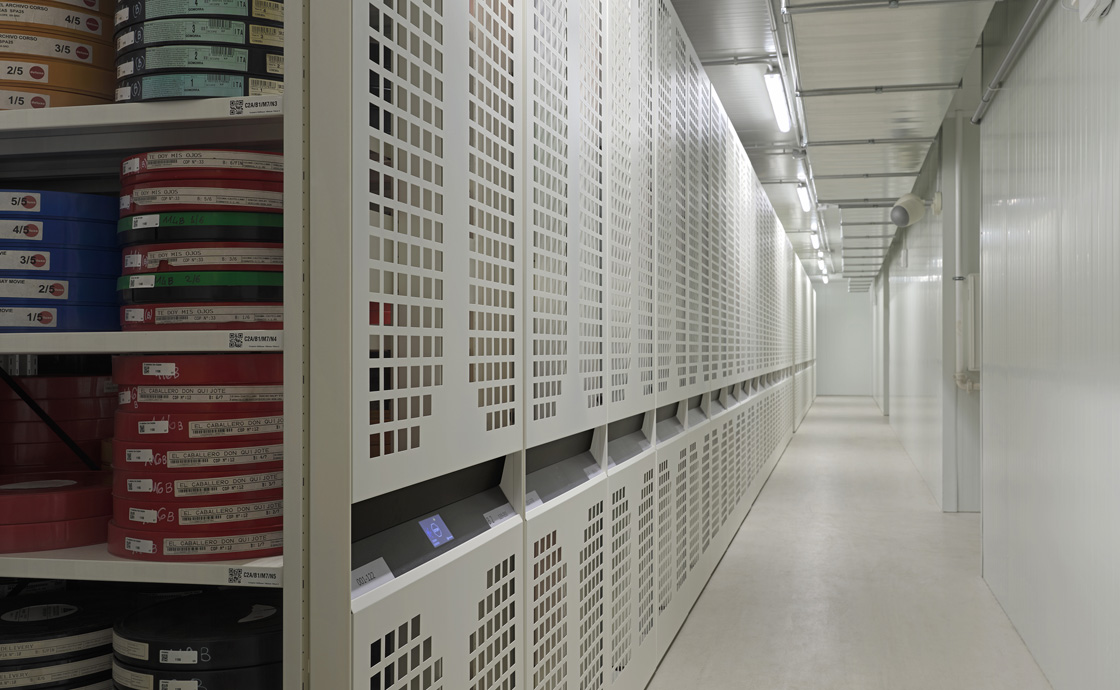
Aware of the huge cultural and financial worth that preserving our history’s artistic, anthropological and documentary heritage has for society, for years at EUN we have been creating customised storage and safekeeping solutions for museums and heritage conservation centres. We put all of our experience and technology at the service of each project.
Just a few weeks ago, Navarre woke up to the news that caused a great media storm and, as usually happens in these cases, a political one as well. The rector of the Public University of Navarre acknowledged to the press that a dozen works of art from the university’s collection had been missing for years, some for even almost a couple of decades. As it was uncertain what had happened to these works – whether they had been stolen, lost or simply mislaid – it had been decided not to report this to the police until the very day of the announcement.
This is not the first time that it had been revealed that works of art had disappeared from collections in Navarre. This is what happened to the Caja Navarra collection in 2014 in a case in which it is estimated that €1.3 million of heritage had been lost that also gave rise to several parliamentary inquiries. Nor is this by any means the first time this has happened in Spain. In December 2021, the International Criminal Police Organization, Interpol, released a search and arrest warrant to find 723 works of art and antiques that had either been stolen or had disappeared in Spain. Currently, more than 52,000 pieces of cultural heritage have either been mislaid or lost.
This does not include the number of works that have been destroyed over the centuries due to war, fire, flooding or poor storage conditions. One of the most distressing events was the fire in 2018 that burnt down National Museum of Brazil in Rio de Janeiro. The catastrophe destroyed 85% of the historic collection, built up over 200 years, that had become one of the oldest in the world. Dozens of Egyptian mummies, sarcophagi of animals and a valuable collection of indigenous ethnography disappeared forever. In all, 17 million objects went up in smoke.
The cause of the fire was negligence. With cut after cut in its budget, since 2014 the National Museum of Brazil had not been receiving the amount required for its maintenance, as a result of which it was showing signs of poor conservation: the plaster was peeling off the walls, leaks, bare electrical wiring, etc. The fire was triggered by a failure in the air-conditioning system and it spread quickly because the museum lacked most of the recommended fire-fighting equipment.
With figures such as those described above, it is no surprise that one of the greatest challenges facing the museum sector is still the ongoing improvement of the surveillance and custody of the cultural items held in their archives. It should borne in mind that in most cases only 7% of a museum’s works are on display. Therefore, a museum is the custodian of our cultural memory.
 |
When one understands that one of the greatest tasks of a museum is not just to share culture, but above all to protect and safeguard it, the conservation of collections acquires special significance.
Over the years at EUN, we have witnessed first-hand the level of detail that must go into making systems that ensure an unsurpassed level of protection. Failing to take the minutest factor into account could result in the destruction of irreplaceable heritage. That is why we tackle each project from a global perspective: we examine the context, the space, the work, specific requirements and from there we come up with customised solutions.
The challenges we face in museums are infinite. Each museum has a specific objective, a unique space, and singular conditions, contexts and uses. Along these lines, some of the challenges we have worked on in recent years are described below.
A single space for preserving a heritage of 70,000 pieces
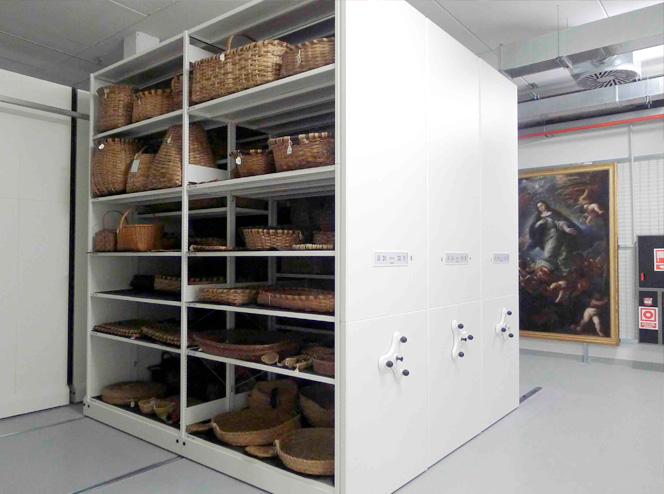
Located in Irun, Gordailua is the Provincial Government of Gipuzkoa's Heritage Collection Centre. Its main goal is to preserve, protect and showcase the province's cultural heritage by housing thousands of ethnographic, artistic and archaeological items. It is a centre that brings together collections belonging to different individuals and organisations to form a single collection whose management is shared. It conducts research into its own collections and provides facilities for external researchers to study cultural heritage.
 |
The challenge was to make Gordailua a modern space fitted out for the conservation of works and pieces, whilst at the same time enabling it to house several collections in a single space that had previously been in several places.
The building has been adapted for storing objects in a bunker-like space, as well as securing the best possible conditions for the storage of the works.
Thus, humidity is always below 60% and the temperature kept at between 18 and 20 degrees. Our intervention also involved using the most advanced technology, not just for our storage solutions but also in how we built them. Furthermore, the objects stored at Gordailua were so wide ranging and of such specific shapes that all types of units and solutions had to be sought to ensure they could be properly stored and classified.
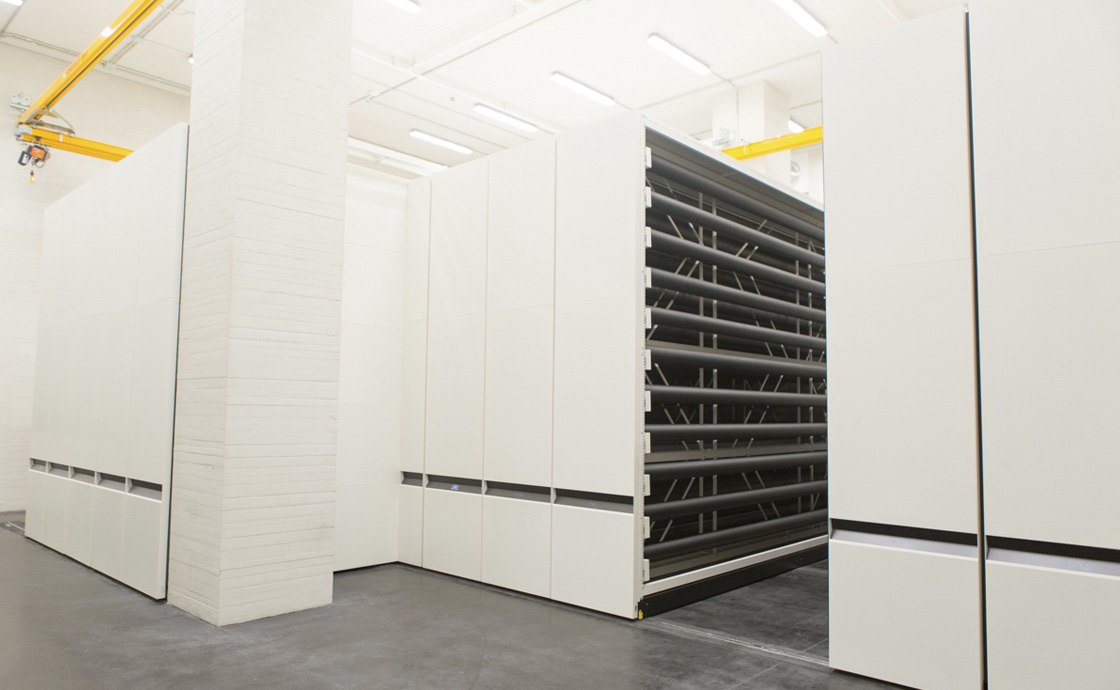
To meet all of these requirements, EUN fitted several different systems. To store paintings in two areas, we used units from our 220 pull-out mesh system, which in addition to optimising space provide great protection to the objects. They are dust- and vibration-proof, which prevents paintings from falling when they are opened or closed. What’s more, they have locking systems on the individual drawers to prevent unauthorised access.
We also used the 620 mobile system, which is ideal for making the most of small spaces as the drawers can be customised and have special fittings, thus allowing the whole wide range of objects to be better stored.
The 610-k500 system with special accessories was used to combine objects of different sizes so that collections could be kept together by type and historical concept. A 610 rack system was used for heavy objects with hangers that make it safe to do conservation work and to handle them.
Gordailua is a living project. There is a constant flow of objects, so it is essential to continually optimise the storage spaces. EUN keeps in permanent contact with the centre, adapts to its constant changes and takes extreme care in any upgrades to avoid affecting all other areas.
Optimisation of the archive lending and management processes
Beyond finding a way of storing a huge number of works in a single space that delivers specific conservation conditions, at EUN we have also risen to challenges focused on the optimal management and classification of collections.
In the case of the work we carried out at the DHUB Design Museum in Barcelona, a space dedicated to design whose brief is to act as a catalyst for meetings and research on the benefits, both cultural and financial, of this sector.un espacio dedicado al diseño que funciona como catalizador para el encuentro y la investigación sobre los beneficios, tanto culturales como económicos, de este sector.
The challenge in this case consisted in optimising the archive lending and management processes, as well as the preservation of the works in storage. The process began by examining the store rooms, where there were unclassified works in a critical state of repair. Thus, a detail study had to be conducted to come up with a suitable storage solution.
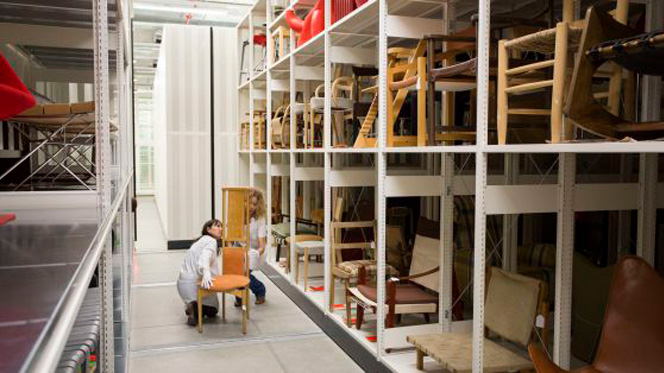 |
The collection is made up of 70,000 objects that range from pottery to textile and the graphic arts, amongst which can be found dresses, furniture, ceramics, and objects made of iron and glass. There are pieces as small as thimbles and as big as carriages.
At EUN we chose to work with the team from the consultancy Albayalde, a pioneering company in Gipuzkoa specialised in the study, management, conservation and restoration of cultural heritage. With them, it was decided to classify items by type and come up with solutions for the different types of objects, with a view to setting up a store room:
A 2,000 m2 space that can now be visited by museum curators and conservators.
Following the study, we chose to customise the storage spaces. For the ceramic tiling we used fixed meshes with 210 hooks in a dust-and vibration-proof structures to ensure the best possible care of the objects. We combined this with the 620 E electronic mobile storage system, where we stored carriages and tapestries. The use of this system makes the most of space, so that the storage capacity is significantly increased in the areas in which it has been fitted. We also put the 620 E system in place with glass fronts so that these modules would also serve as display cabinets. To all of this we added special work and conservation tables, chests of drawers for storing prints, etc.
To summarise, this was an end-to-end project in which customised solutions were made for the different types of works to deliver orderliness, security, control and management in an accessible, visitor-friendly space.
 |
Top control in the safe move of works of art
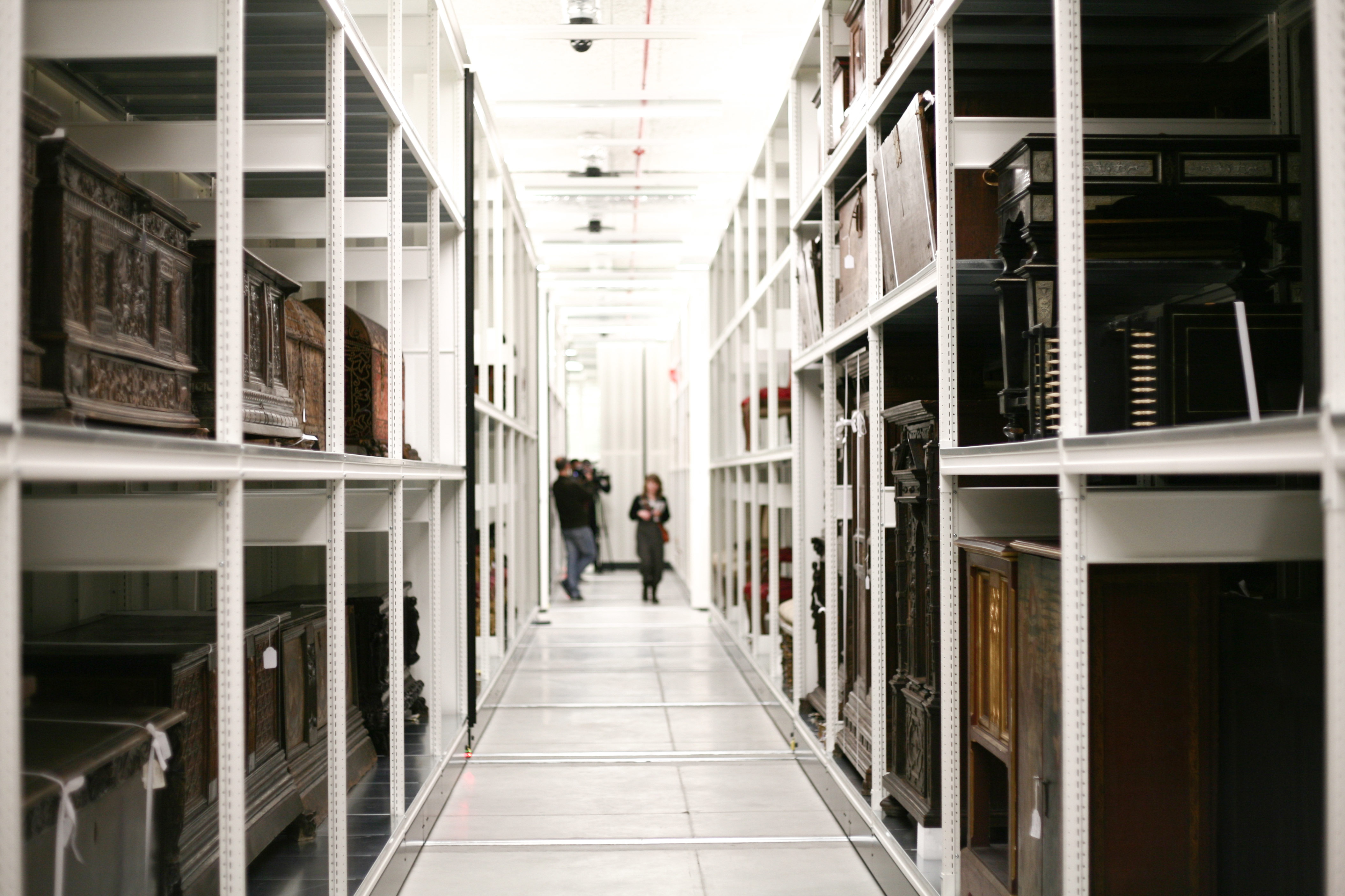
The Basque Museum was facing its full refurbishment, for which it had to find more exhibition space in its main building in Bilbao’s Plaza Unamuno. Finding extra space to display its collections involved moving more than 50,000 objects stored in Bilbao to a new storage facility in Zamudio.
This would require a set-up able to take in the wide range of pieces and a management system that would accurately track them during the move.
The preliminary technical study took into account all of the stages of the project, including the process of moving the collection. The project was complex for two reasons: on the one hand, the need to streamline the net floor area to maximise storage capacity and, on the other, to ensure the integrity of the works and their suitable conservation at the required temperatures, humidity levels and to protect them in the event of a fire.
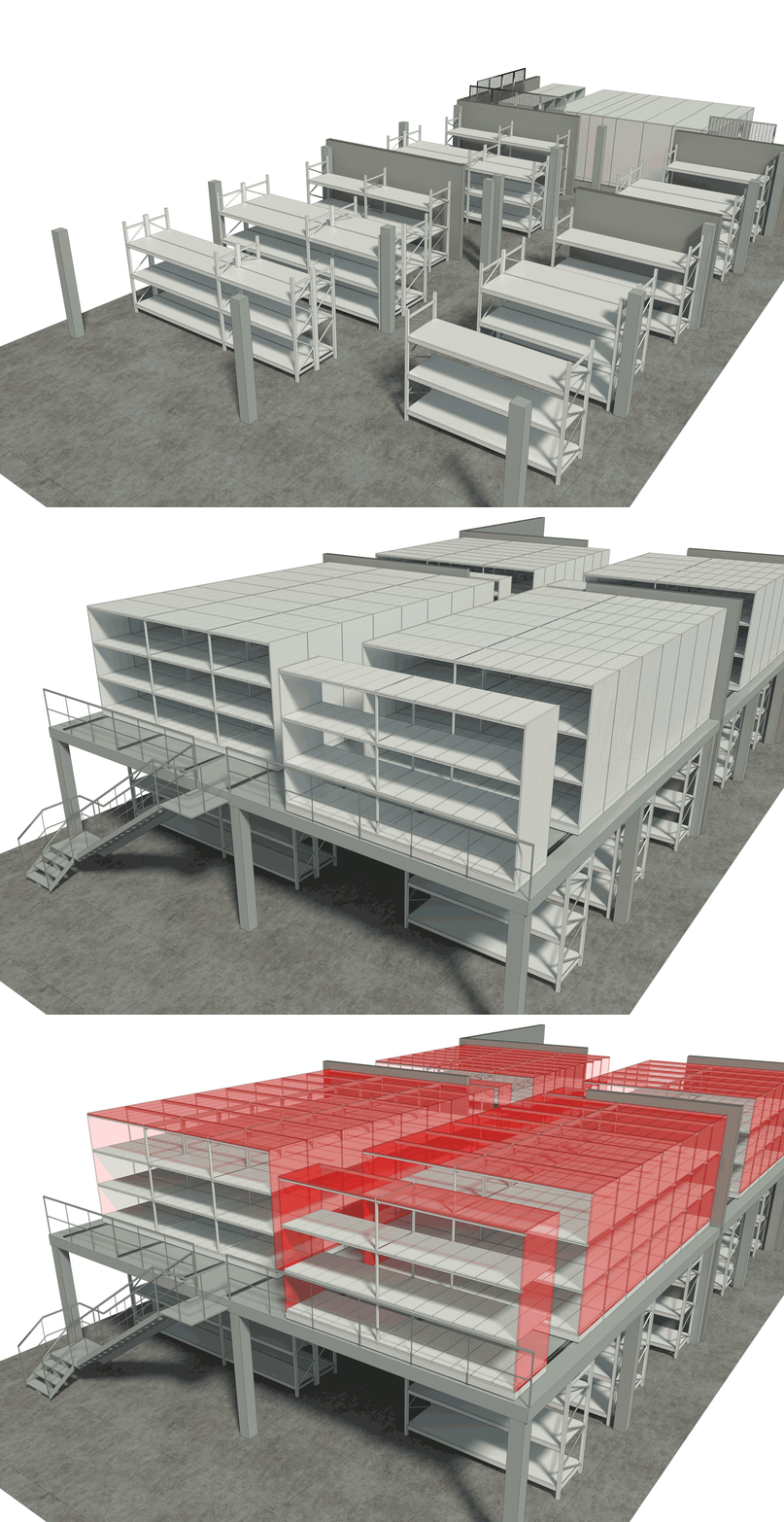
With regard to the space, the survey of the building and its interior architecture led us to think about making more use of its height. This is why we assembled a second level using our storage systems, thus increasing the storage capacity and avoiding any building work, in other words, construction costs were kept down.
 |
We used the 610 fixed storage systems to house heavy or large objects such as furniture and farming tools. Small- and medium-sized pieces such as textiles, coins and pottery found their place in the 620 E electronic mobile storage system combined with the 220 mesh system.
Particularly delicate fabrics and paintings were relocated to a separate room with environmental conditions suited to their requirements and a damp-proofing system. This means that in the event of a fire, a vacuum would be formed in this space and the system would put out the fire in a few minutes without damaging the collection kept in storage. This is all thanks to building all of the technology driven by EUN Logic software into the system.
The software also solved the problem of moving the works, as it ensures the traceability of the whole collection in each of the project stages and it subsequent management. Thanks to this, the objects stored can be immediately tracked using QR codes placed on each object and location.
The move was completed will full control of the location of objects from their origin to their destination by simply consulting a PDA device.
EUN Logic’s ability to track each piece make it possible to take one out of storage if conservation work had to done to it or if it was to be lent for an exhibition at the museum or another institution.
EUN’s technology turned the Basque Museum into one of the first museums in the Basque Country to move a collection without breaking the information chain. The new store room with state-of-the-art equipment will ensure that the cultural heritage of Bilbao and Biscay is conserved and has made the Basque Museum an international benchmark.
An end-to-end project for the conservation of royal heritage
The commission by the Royal Collections Gallery, located in Madrid’s Royal Palace, was a very complex project due to its technical requirements. The number of works, their characteristics, type and geographic spread meant taking stock of the collection as a whole in order to take an end-to-end approach to the project.
To do so, we once again teamed up with Albayalde, with whom we conducted a meticulous study of every work in order to decide on how to manage the conservation of each one. This work took more than two months, but it greatly facilitated taking decisions on the design of the space and its infrastructure.
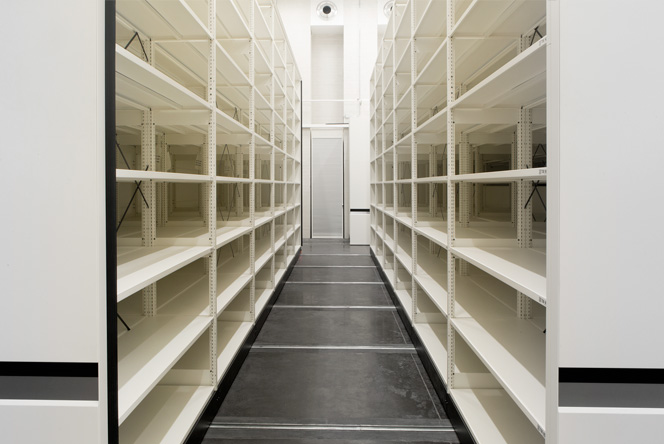 |
The 2,505 m² storage space entailed fully equipping six separate rooms, a large distribution area and a space devoted to the storage of carriages. With 80% of the products used having been designed ad hoc by EUN, the project required technical know-how and a high capacity for industrial development.
The design of the facility took into account the fact that access would be required to handle extraordinarily heavy large pieces.
In order that nobody involved in handling and moving these pieces touched any of the tapestries, the use of special hoists and trolleys was put forward. The distribution of the space allowed for the radius required to move the tapestries around, which can measure up to four metres long.
In the rooms dedicated to paintings, the distribution of the space was successful as large canvases could be moved.
In this project, large units from the 620 E storage system were used with pull-out rollers in order to be able to store and roll up the tapestries. Hoists were fitted at the top for handling the tapestries and trolleys specifically designed to move them around. The 620 E storage system was also chosen for storing carpets, but with more heavy duty structures, mounting brackets and a mechanism for lifting heavy pieces. The 220 mesh system with racks 4.5-metres high were used for large paintings. The 4-meters high by 3.5-metres long flat file cabinets are probably the biggest in Spain.
Wider storage systems were designed with pull-out drawers for the conservation of the decorative arts. In addition, EUN’s Logic software was installed to facilitate the management, cataloguing and traceability of all of the pieces in the collection. To ensure the connectivity of the whole system, Wi-Fi access points were installed for better coverage in areas with poor signal reception. Lastly, specific storage systems were supplied for the corridor where objects of considerable size and weight are kept.